

Hash vs. weed difference: the showdown between flower and resin ⚡️

Weed refers to the raw dried hemp flower, while hash results from a mechanical extraction of its resin. While weed appeals due to its natural aromatic profile, hashish offers a much more radical concentration of active ingredients. People are often lost when faced with textures and potencies that vary drastically.
This guide breaks down production secrets and purity criteria to help you effectively distinguish between these two products. We will review the technical specifics of each format together.
- Difference between hash and weed: the flower vs. resin match
- Production and texture: from raw pollen to compressed block
- Why is hash often perceived as heavier?
- 3 criteria to identify a quality product
Difference between hash and weed: the flower vs. resin match
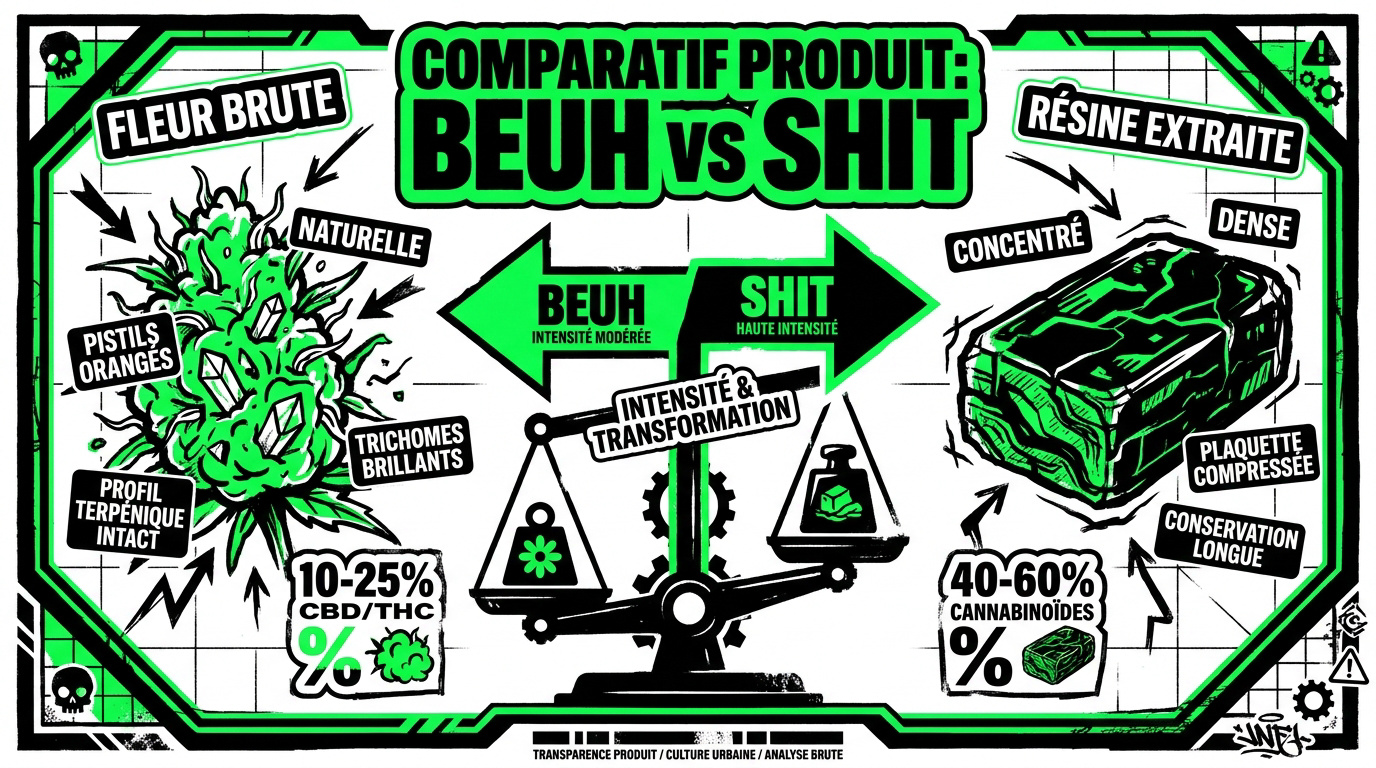
Weed refers to raw dried flower (10-25% CBD/THC), while hash is a concentrate of pressed resin reaching 40-60% cannabinoids. These two products differ in their mechanical extraction methods and sensory intensity.
Weed: Flowering top or "bud," raw dried plant material.
Hash: Resin, concentrated extract of pressed pollen.
We start by exploring the raw nature of the flower to fully understand the original product.
Weed, the raw product in its pure state
The cannabis flower is the flowering top of the female plant. It is the original product. It is simply harvested then dried without chemical transformation.
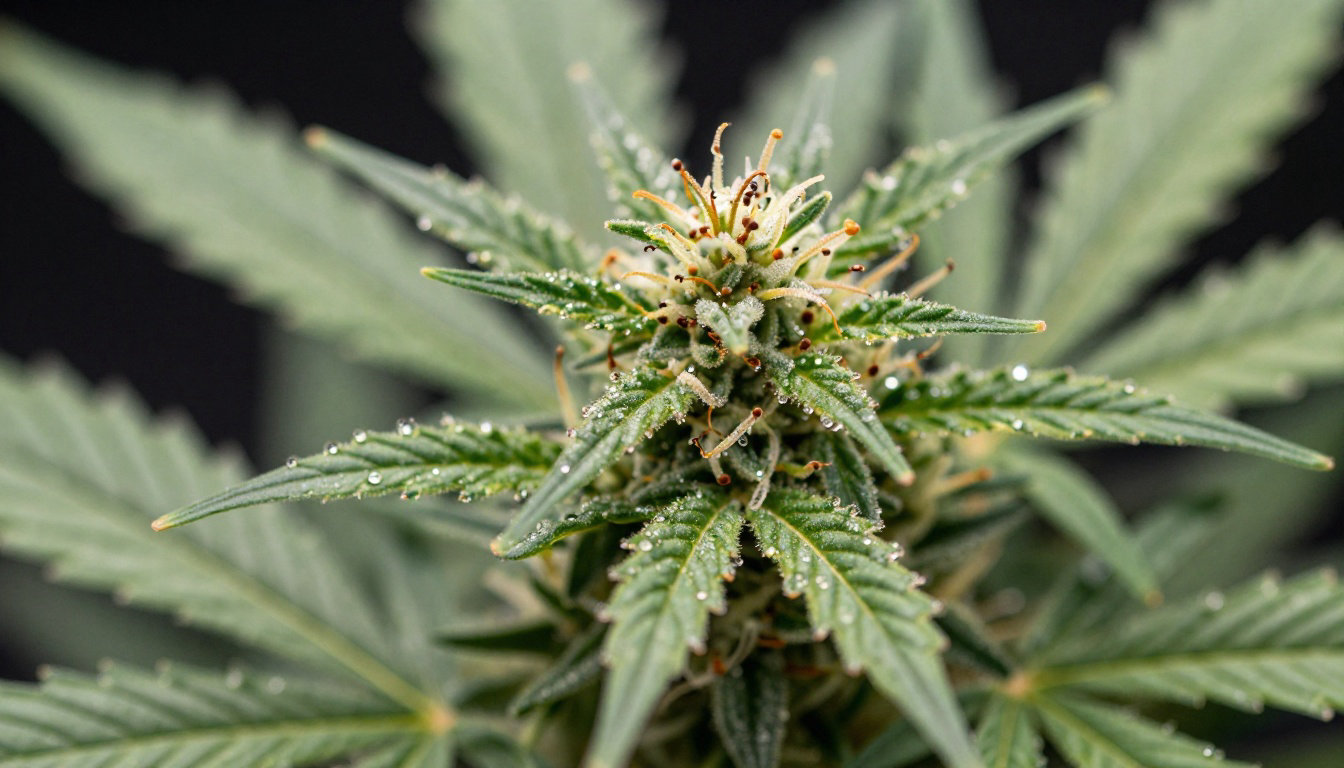
The visual aspect reveals compact buds adorned with orange pistils. One often sees shiny crystals called trichomes. These glands contain the bulk of the active ingredients and aromas.
Keeping the plant intact leaves the terpene profile undisturbed. It is the choice for those who want botanical authenticity. Learn how to choose quality CBD flowers to avoid unpleasant surprises.
Hash, a concentrate of processed trichomes
Hash results from the mechanical extraction of resinous glands. The trichomes are separated from the plant matter. It is a dense and powerful substance.
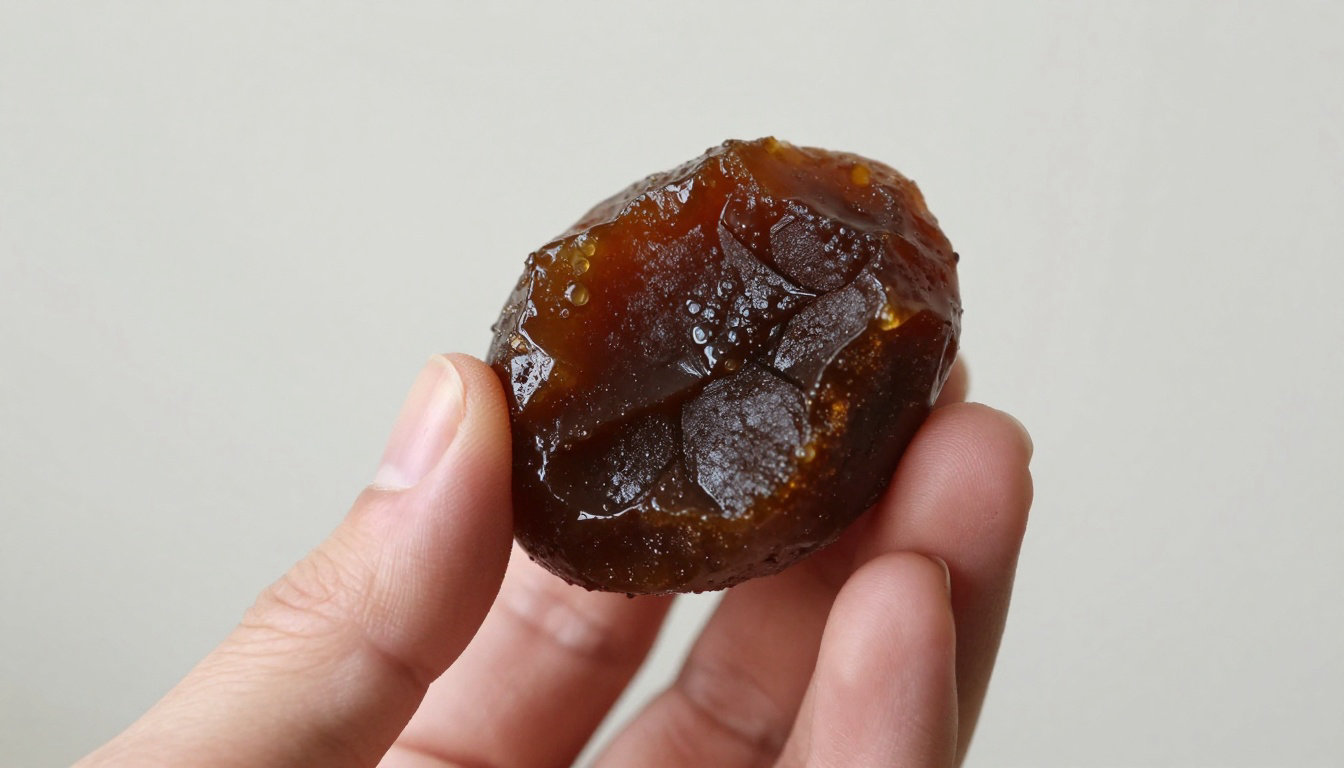
Textures vary according to the production method. You can find greasy and sticky hash or crumbly varieties. Everything depends on the pressure applied.
The final product comes in a small slab or compressed block. Its color ranges from sandy yellow to deep black. This transformation drastically concentrates the effects. Find affordable CBD resin without sacrificing purity.
Production and texture: from raw pollen to compressed block
After distinguishing the two forms, it is essential to understand how one goes from a green plant to these finished products that are so different.
Harvesting and drying: the journey of weed
Trimming consists of removing unnecessary leaves. Then comes curing, a crucial refining step for taste. The aromas are left to develop slowly.
Indoor cultivation offers dense flowers, while outdoor produces wilder buds. Each cultivation method influences the final result. Drying must be well controlled to avoid mold.
Proper drying preserves fragile terpenes. This is what gives the bag its unique smell. Quality depends on it, just like for our carefully dried flowers.
Sieving and pressing: the secrets of resin
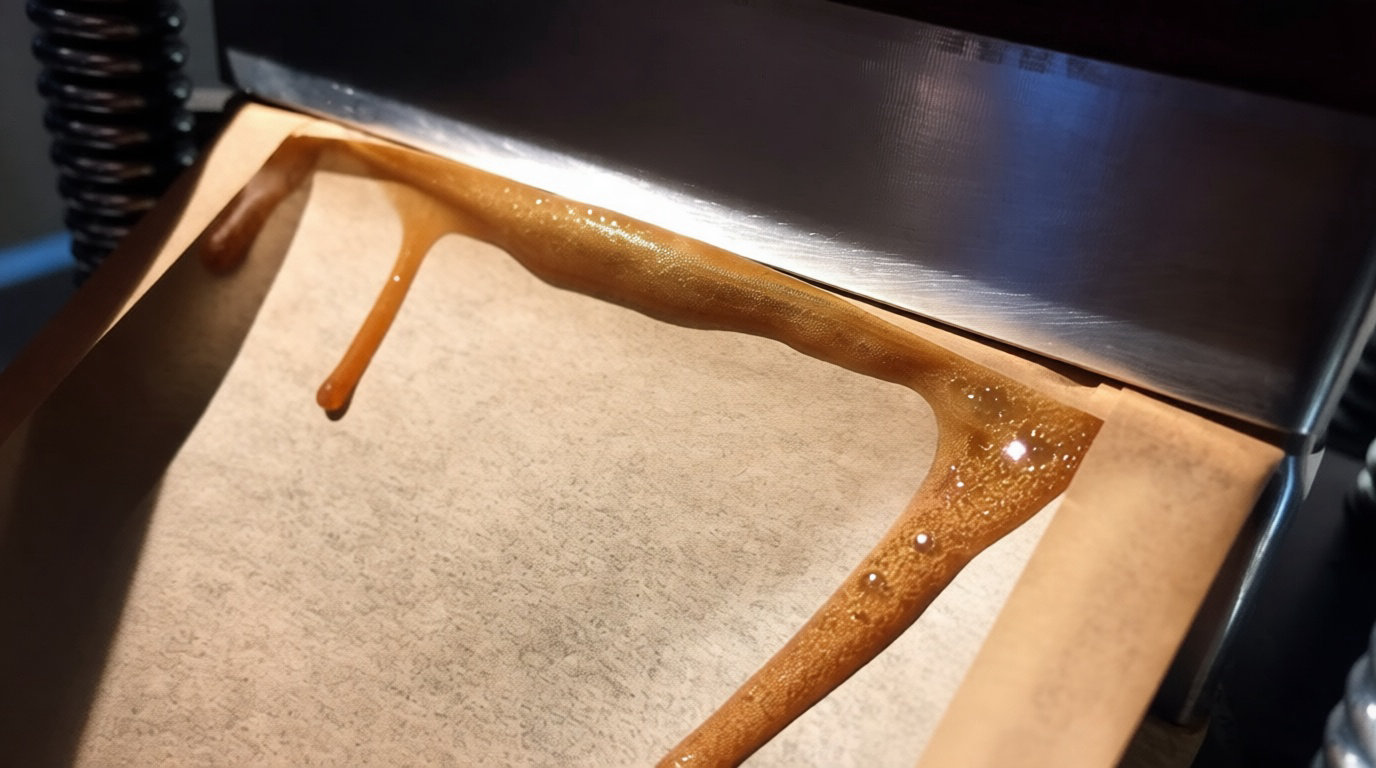
Pollen is collected by sieving dry flowers. This golden powder, kief, is the base of hash. Pressure, whether cold or hot, binds the oils to make the whole thing malleable.
- Dry Sifting
- Water extraction (Ice-o-lator)
- Hand pressing
Pressing determines the density of the block. A noble product does not crumble on its own and reacts under the fingers. This is the art behind our pressed CBD hash. But then, what is the real difference between hash and weed in daily life?
Why is hash often perceived as heavier?
This difference in production directly impacts the consumption experience and the perceived potency.
Trichome density and cannabinoid concentration
Resin is a pure concentrate. It contains many more cannabinoids than a classic flower. The CBD or THC rate is often doubled.
A small piece of hash is equivalent to a large weed bud. The immediate potency saturates receptors more quickly. This explains the brute force from the start.
Density plays a major role in the diffusion of effects. You consume less material for an intense result. It is a question of molecular purity, especially for THC+.
Terpenes and effects: between high and stone
The flower offers a balanced and airy feel. We talk about a cerebral "high" effect. It is the natural result of the blend between cannabinoids and intact terpenes.
Resin promotes deep physical relaxation. This is called the "stone," that sensation of heaviness ideal for the evening. The difference between hash and weed comes into play here.
Pressing degrades some components, making the profile earthier. The body reacts differently to these ultra-concentrated molecules. The result then seems always heavier than herb.
| Criteria | Flower (Weed) | Resin (Hash) |
|---|---|---|
| Concentration | 15% vs 40% | Compact vs Plant-based |
| Aromas | Floral | Spicy |
| Effect | High | Stone |
3 criteria to identify a quality product
To enjoy these effects without risk, you must know how to separate the wheat from the chaff, especially with cutting agents.
Visual guide to spot cutting agents
Test your product with a light flame. Good resin must bubble gently without blackening in a suspicious way. The smell must remain natural and botanical.
Avoid smells of plastic or chemical solvent. These are clear signs of dangerous additives. The texture should not be hard as a rock.
Visual purity is your first defense against contaminants. Observe the color inside the piece. It must be homogeneous and without strange residues.
- Sparks during combustion
- Black, greasy ash
- Chemical burnt smell
- "Rubber" texture
Risks of additives and importance of lab analyses
Substances like paraffin or henna are toxic to the lungs. They are used only to increase weight. It is a real health danger.
In France, the legal THC threshold is set at 0.3%. Respecting this limit guarantees a product in compliance with the law.
Always demand independent laboratory analyses. Traceability is the only real safety guarantee against heavy metals. A serious vendor provides these tests without hesitation. This is the difference between a street product and our laboratory-tested CBD products.
Natural raw flower or ultra-concentrated pressed resin, your choice depends on the desired intensity. Master this difference between hash and weed to ensure premium consumption without toxic additives. Secure your well-being now with our lab-certified products. Opt for excellence and transform every session into a pure and memorable experience.
FAQ
What is the real difference between weed and hash?
Weed (or herb) refers to cannabis in its raw state, simply dried and refined. It is the original product, botanical and rich in aromas thanks to its intact terpenes. Conversely, hash is concentrated resin. Trichomes (pollen) are extracted to be pressed into dense blocks.
In terms of potency, the match is close, but hash often wins with much higher CBD/THC rates (up to 55%) compared to about 10-25% for the flower. The taste also differs: floral and fresh for herb, compared to earthier and spicier notes for hash.
Is hash more potent than weed?
Definitely! Hash is a concentrate of active ingredients. Since only the resin of the plant is kept, cannabinoid density explodes. A small piece of hash often contains as many molecules as a large weed bud, which saturates your receptors much faster.
It is this concentration that explains the "stone" effect often associated with hash: deep physical relaxation and a sensation of heaviness. Weed, being more balanced, generally offers a more airy and cerebral "high," ideal for staying active or creative.
How do I know if my hash is high quality or cut?
Keep your eyes peeled! A good product should have a natural, botanical smell. If it smells like plastic, tires, or solvent, run away immediately, it is full of toxic additives like paraffin. You can perform the flame test: premium resin should bubble gently without giving off suspicious black smoke.
Texture also matters. It should be malleable or crumbly depending on the type, but never hard as stone or too shiny (a sign of lacquer). For total safety, always prioritize products with lab analyses that guarantee the absence of heavy metals and compliance with the legal THC rate of less than 0.3%.
What are the different types of effects between "high" and "stone"?
The high is the "lifted" effect often linked to weed. You feel euphoric, full of energy, and your senses are boosted. It's the perfect mood for chilling with friends or drawing. The stone is hash's specialty: total relaxation that nails you to the couch (the famous couch-lock) and deeply soothes the body.
This difference comes from the processing of the product. When pressing resin, some components evolve, favoring this heavy side. The flower retains a more complete terpene profile that allows for a lighter and more stimulating feeling.
How is hash (cannabis resin) made?
There are several methods for obtaining this precious concentrate. The most classic is dry sifting (Dry Sift): flowers are shaken on ultra-fine sieves to harvest the "kief." One can also use ice water (Ice-o-lator) to separate the crystals by cold.
Once this golden powder is collected, it is pressed. Pressing can be done cold to keep a light color and maximum purity, or hot to bind the oils, resulting in a greasier texture and darker color. It is an art that transforms plant dust into a noble and powerful product.

